Showing posts with label children. Show all posts

Tuesday, March 3, 2015

STEM and the Arts


I’ve heard a lot of talk recently about the problematic distinction, especially in education, of identifying someone as a “science” person, or an “art” or “humanities” person. 

With the widening career gap in the sciences between men, and women and people of color, much attention has been paid to how to increase the numbers of underrepresented groups in the sciences. Predominant focus falls, as usual, on our education system and how K-12 institutions can change these disparities. Programs targeted at increasing youth exposure to science, technology, engineering and math (STEM) fields abound. But at what cost?
Breaker (via stock.xchng)

I for one, when faced with the question “Are you a science person or an art person?” legitimately can’t answer.

Partly because I think it’s a meaningless distinction; an arbitrary definition based on our limited understanding about people and how they think about the world.

But partly it’s because I consider myself both a science person and humanities person. I love learning about what science tell us about the world and each other. But I also love singing, books, and writing. And it’s the combination of these that I find truly fascinating.

I think it’s why I love psychology and qualitative research so much. Those two fields marry the scientific method and the humanities in a way that is both logically appealing and creatively fascinating to me. The study of words, relationships, and people acknowledges the beautiful complexity of the human condition while also seeking to understand it more fully.
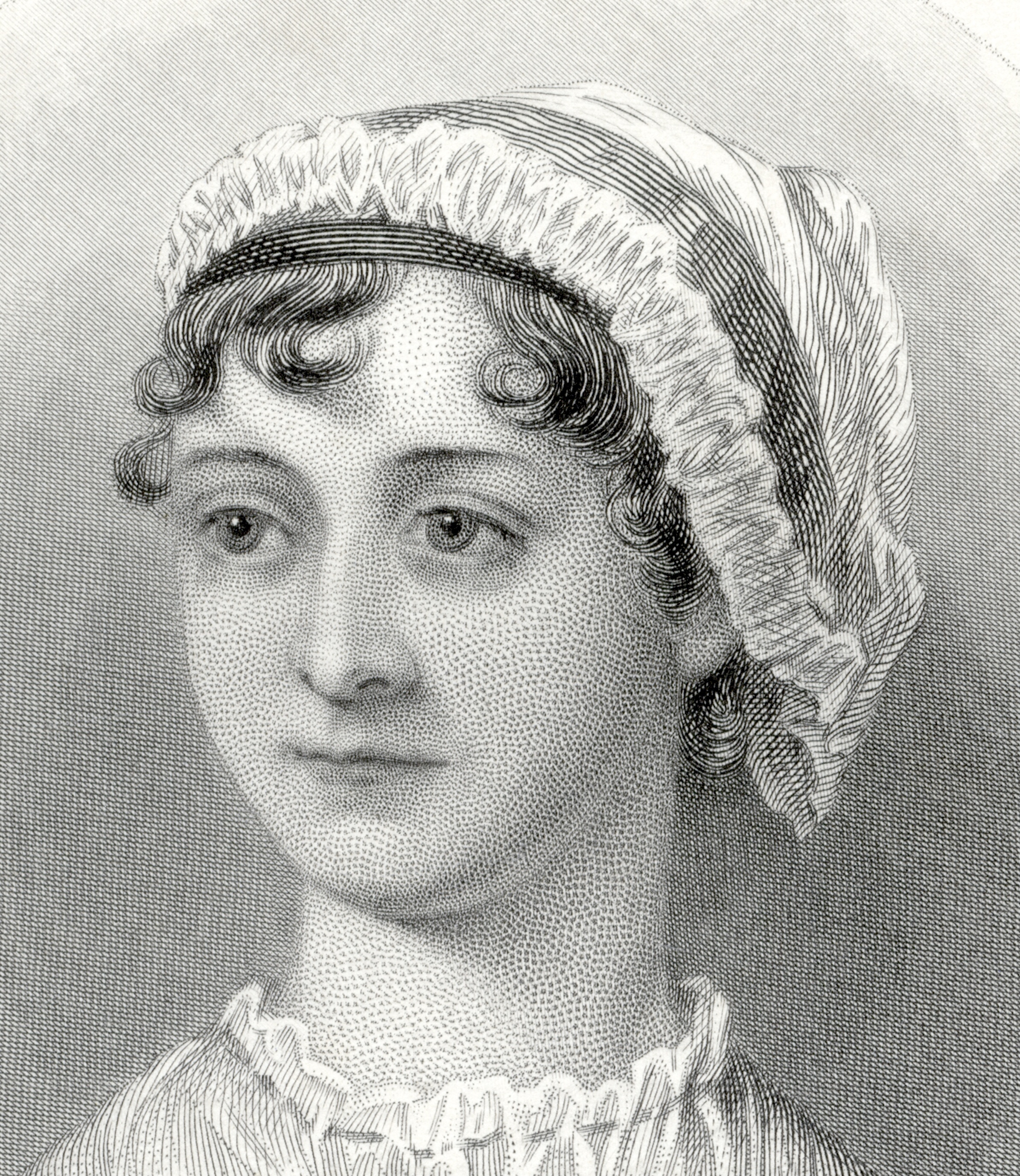
Jane Austen (via http://commons.wikimedia.org/)
But if I had never had the opportunity to deeply study BOTH science and arts, I know I wouldn’t have ended up where I am today. If I had been labeled as a “science” person when I was young, just because I was a girl who happened to be good at math, I would have turned out a poor scientist. Similarly, if I had been labeled an “art” or “humanities” person because I happened to be a good singer and liked reading Jane Austen novels, I would have turned out a poor humanities scholar. I am neither one nor the other. I am both. And I know I’m not alone in that.

The abundant focus on STEM at the expense of the arts leaves us with an “either or” scenario, not a “both and.”

But I’ve found that really understanding the human condition requires both a willingness to acknowledge what science tells us about ourselves, but also a willingness to acknowledge that we don’t know everything. Not everything is as neat and quantifiable as science would like. Nor is everything always as achingly complex and mysterious as the arts might suggest. Reality is somewhere in the middle.

I think it’s unfortunate that we as a society are still trying to label our youth as one or the other and intrinsically placing more value on one (science) over the other (humanities). This does our youth a disservice because it does not foster their own intellectual curiosity. It perpetuates the tendency toward stereotypes, labeling and judgment.

In reality we would all be better off if we viewed this as a spectrum, acknowledging that everyone is at least a little bit of a scientist and a little bit of an artist. Scientists can be good artists just as artists can be good scientists.

Life shouldn’t be about whether you’re a “science” person or a “humanities” person. It’s about wonder, curiosity, passion, and creativity. Those are quintessentially human traits that have spanned generations and brought the fields sciences and humanities to where they are today – to a better understanding of the world and the human condition.

So focus on developing children’s wonder, curiosity, passion and creativity and let them discover where their fascination will take them.

We’ll all be better off in the longer run.


What do you think? How can we enhance interest in science while also teaching the value of humanities and arts?

Wednesday, October 16, 2013

Finding the Middle, Early

I read an interesting Huffington Post Blog today about the need for early childhood to be a major world-wide focus in order to ensure positive global development in the future.


The article points out that in the last 20 years, there have been major increases in children attending primary schools across the world. However, there has been less progress with enrolling children in “proven early childhood development programs” worldwide.

The authors then go on to discuss the importance of a strong early childhood to build a foundation for later healthy growth and development, and the links to a successful global workforce and economy. They outline the importance of healthcare, parental support, and basic nutrition as being major factors early in life that can substantially impact later academic, behavioral, and global economic success.

All of this is fairly straightforward to me. It’s the party line I’ve heard (and have generally subscribed to) from day one of my studies in child development.

However, something of this post smacked a little too much of the idea that there is only “one right way” to do something for my taste.

Though I certainly understand the benefits and values of early childhood supports and education, and fully support the need to expand resources for families who are at-risk for highly preventable mental and physical health conditions, the idea that “proven early childhood development programs” are the one, and perhaps only way to go makes me a little leery.
 
Diversity 6 (via stock.xchng)
Especially when we’re taking a world-wide focus on the issue, focusing in on early childhood programs, which in many places are nationally funded and/or monitored, seems a little short-sited. Though I fully understand the importance of evidence-base in developing programs and interventions, I also know that science is one, but not the only, way of knowing something is good for kids.

Don’t get me wrong; it drives me nuts when people assume that they know everything that I know about child development just because they have kids. But it also drives me nuts when scientists claim to know everything about children when they’ve never worked directly with them outside of a laboratory setting one day in their lives.

There are generalizable realities in the human condition, to be sure. And science can help elucidate some of that generalizability.

But it is not, nor should it be, the end all and be all, largely because the field of child development has not studied everything in and across every world culture. There are nuances, differences, and beautiful variations in the way in which humans approach and experience the world around them. Science has a tendency to trounce on that beauty and chalk it up to “variations” or “outliers” that either aren’t important enough to explore, or are just noise in an otherwise coherent data set.  
Breaker (via stock.xchng)

This just in: Science doesn’t know it all.

And that’s okay. Frankly, it’d be a pretty boring world if we did know it all. Plus, all the scientists out there would have to pack their bags and go home if there was nothing else to learn.

My point here is that though science has incredible value and can shed light on some of the most complex things in our world, it is not the only answer.

“Evidence-based” isn’t, and shouldn’t be the only way.

There are a lot of ways to do things right. There are a lot of ways to know the right thing to do. There are a lot of ways to get to the same positive outcome. ‘Because science says so’ is one of many valid reasons to do something.

I’d just hate to think that we’re getting to a place where nations institute a 'one and only right way' to raise children, based solely on what science tells us. That mindset is limiting, and squashes the beautiful variations inherent in the human race.

Now, I don’t mean to be an alarmist. Nor do I mean to suggest that the authors of this article don’t recognize the value in other ways of knowing, or the variation in culture that may be lost in a more one-size-fits-all approach.

But I worry that there are people who may read this article, and who may subscribe fully to the belief that universal, evidence-based early childhood education is the only way to “correctly” raise children. And the more early childhood education gets entangled with state and federal policy and funding, the more this belief will become intractably instilled in our collective psyche.

But instead, let’s call this what it is. Early childhood education programs are a very western idea of child-rearing. And that's okay. But that doesn't make it suitable for the whole world. 

So I fear we are again getting into a situation where the West thinks it knows the “right way” to raise children, to the detriment of other less powerful, but equally vibrant cultures throughout the world that might raise their children differently.  

Children (via stock.xchng)
It’s a hard line to walk because on the one hand, there are certainly universal things that are very detrimental to the successful development of a child. Poor health and nutrition, traumatic experience, lack of family support and connection, mental illness, violence, the list goes on. And there are things that early childhood supports can do to help buffer against those negative early life experiences and enhance the lives of young children. Some of those supports are early interventions and quality early childhood care. Raising global awareness of these things is a laudable goal. 

But on the other hand, where do we stop? Quality is important, to be sure, but if certain cultural beliefs and practices are not in the “evidence-based curriculum” does the funding stop? Where does the western world draw the line on what’s an acceptable way to spend taxpayer dollars? What does it deem as “okay”? What’s defined as “not good enough”? Who decides?

These are the questions I fear we haven’t discussed enough.

And I worry that it will be the loud, powerful voices of western thinking demolishing all others in their path without careful consideration of what might be lost in the process.

And that sounds eerily familiar, and feels a little like groundhog day.


What do you think? Are we just repeating history all over again? Or will we find a middle ground, early?

Wednesday, August 21, 2013

Plight of the "wrong" neighborhood

Recently I stumbled upon a video journalism series put on by the Chicago Tribune called Chicago Under the Gun. Its gut-wrenching portrayal of the ever-present violent chaos on Chicago’s South and West sides has been stuck with me ever since.
 
Gun 2 (via stock.xchng)
Between sobbing cries of mothers who have had their children gunned down at the playground, to the angry rage of brothers of young men slain for walking down the street, this video series is about more than just crime statistics. It’s more than an emotionally disconnected report on the problem areas of the city. It shows the reality of the pain, anger, and frustration that entire communities of people face all too often, just for living where they do.

And if you’ve got the stomach for it, you can find the full series here: http://graphics.chicagotribune.com/under-the-gun/
Warning, there are graphic images and explicit language.

For those of you who, like me, have to be careful to screen what you watch because of the effects it can have on you (nightmares, ruminating, feeling depressed, etc), I’ll lay out it all out here, in words.

Chicago has a long history of gun violence. Some of the highest numbers of homicides come from the early 1970’s (970 homicides in 1974), and it has persistently been an issue. Last year, Chicago witnessed another spike in homicides, 506 reported, the highest rate in the country last year. 

Many analysts are suggesting that 2012 was a fluke year, that 2013 will not match that rate. As of August 12th murders are down 26% from last year, and shootings are down 22% from last year. In fact, the murder rate has not been this low since 1965. Indeed, according to redeyechicago.com, only 250 homicides have occurred so far this year as of August 11th, 2013.

But here’s the thing. Last weekend alone (August 9-11th) from Friday night through Sunday night, 4 people were killed and 37 were wounded in Chicago, most of them shot. Chicago had logged 15 homicides in the month of August as of August 11th.

To put that in perspective, only 21people had been killed in Minneapolis this year as of mid July. That’s only 6 more than were killed in Chicago in 11 days.

Now, I realize that none of this takes into account the size of the cities, number of people, etc. In fact, if you’re measuring per capita, Chicago doesn’t even make the top 25 most dangerous cities. Statistically speaking, the odds of being murdered in Chicago are about a 1 in 6,250.

But, what happens if you narrow that down to Chicago’s West and South sides as opposed to including the entire 227.3 square miles of the entire Chicago area? Well, the odds of being shot while walking down the street are closer to 3in 1,000 on the West Side of Chicago. And if you happen to be somehow connected to a gang, be it by family or friend, or even friend of a friend, your risk in some neighborhoods, like the West Side of Chicago, skyrockets to an estimated 30 in 1,000 (read more here about using Social Networks to map crime).
 
Police Line (via stock.xchng)
Now clearly, violent homicide is a pervasive problem across the U.S. and the world, not just in Chicago. And yes, there are many MANY factors contributing to it. Poverty, disrupted family structure, poor education, lacking community supports, insufficient health care, and lack of gun control to name a few.

Yet somehow, despite knowing all of this, we often treat these cases with a dangerous ambivalence. Somehow, there’s this idea that loss of life of people from the “wrong neighborhood” means less than life lost in other places – in places where “that kind of thing just doesn’t happen here.”

Somehow, we’ve gotten to a place of complacence. Where the death of a 6-month-old child who was shot and killed while her dad changed her diaper in the back of a car can be minimized to an explanation of living on the rough side of town and having a criminal for a father.

But her dad’s grief is real, and in no way less traumatic than the grief of any of the parents who suffered from the slayings of their innocent children in Newtown, Connecticut.

So why do they sometimes feel so different? Why does it so quickly come down to “being from the rough part of town,” rather than an understanding that grief over lost innocence is as immeasurable there as the grief of the families in Newtown? Is it the media? Is it about race? Poverty? Social standing? Perception?

My sense is, it’s probably a little of all of the above.

I understand that making sense out of tragedy is part of the process of grief. As humans we seek to compartmentalize and rationalize horrendous crimes – to figure out “why” this happened. And the “wrong neighborhood” explanation is a quick and easy rationalization of brutal murder.

But when you live in a place where grief becomes the norm, you start believing that you don’t deserve more – that this constant grief and fear of certain, impending loss weaves its way into your psych.

How do you fight back when the things you’re fighting have become the hard facts of life?


What about the teenagers, who are trying desperately to get out of this place to a new life, who have to face the death of their best friend, whose only sin was running to find shelter in a rainstorm after school?

This is the reality that many children are facing everyday, here, in America. It’s not a reality that many of us are aware of, or comfortable talking about. But if we don’t talk about it, if we’re not aware of it, that reality will be the same for the next generation, and the next, and the next.

Clearly, there is no one right, or easy, answer to the pervasive issue of violence. Despite increased efforts to curb violence in Chicago, and many other communities across the country, it’s still a present threat in children’s lives.

One of the experts featured in the Chicago Under the Gun film, Marlita White, the Director of the Office of Violence Prevention in Chicago, argues that this kind of pervasive violence inserts itself into the psych of an entire community, and is a public health issue. Violence affects and is affected by poverty, lack of education, disrupted family structure, and absent community supports. Violence dehumanizes people and entire communities. White reflects: “If we respond to violence as we respond to other kinds of health concerns [then] we can turn the tide on violence.”

The only way out of this is coordinated, extensive, systems-wide, extremely costly reforms to many of our biggest, most unwieldy systems. Education. Welfare. Physical and mental healthcare. Law enforcement.

The chances of this happening successfully? The pessimist in me says not good. The optimist says we’ve got to start somewhere.

I applaud the strength and courage of so many in this country who already take on those challenges every day; the people who serve, who protect, who mentor, who lead, who guide, and who tirelessly advocate for others. You are the ones who make the difference.

In academic jargon, it comes down to implementing systems and structures than can, and should, promote positive change in the lives of kids and families, no matter what neighborhood they’re from.

In plain English, it comes down to taking better care of each other.


In the meantime, I cling to the hope that there are ways to make this better. There have to be.